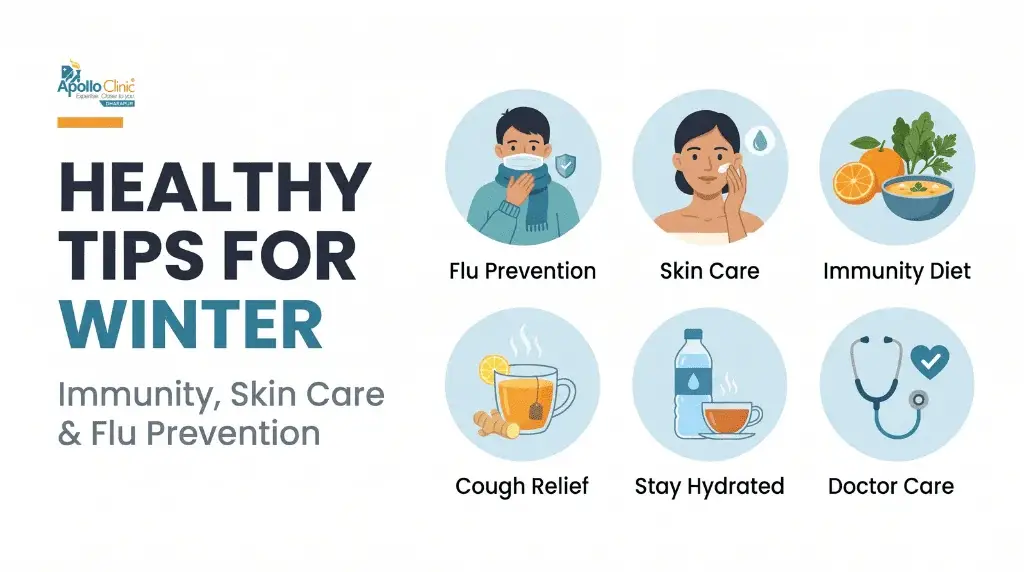
Colder mornings, lower humidity, and sharp day-to-night temperature drops place noticeable strain on the respiratory tract, skin barrier, and immune system. Following evidence-based healthy tips for winter helps children, working adults, and senior citizens prevent seasonal viral infections, manage dry skin, and avoid preventable complications. This clinical guide outlines practical seasonal health tips covering cold versus flu identification, natural skin protection, immunity nutrition, cough relief, and exact warning signs that require medical care.
- 1. Respiratory Health: How to Compare Cold and Flu Symptoms
- 2. Winter Skin Survival Guide: Preventing Dry Skin Naturally
- 3. Boosting Your Defenses: Winter Diet for Immunity
- 4. Science-Backed Home Remedies for Winter Coughs
- 5. Guwahati Weather & Upcoming Winter Health Guide
- 6. When to Stop Home Remedies and See a Doctor
- 7. Summary: Your Daily Winter Wellness Checklist
- 8. Frequently Asked Questions (FAQs)
1. Respiratory Health: How to Compare Cold and Flu Symptoms
Cooler, drier air lowers moisture levels inside the nasal passages, reducing the efficiency of mucosal defenses that trap airborne viruses. Combined with enclosed indoor spaces and winter fog or particulate air pollution, managing respiratory health in winter becomes a clinical priority for households across every age group.
One of the most frequent mistakes patients make is treating influenza as a routine common cold. Although both are viral respiratory illnesses, clinical guidance from the Centers for Disease Control and Prevention (CDC) highlights that influenza carries a significantly higher risk of lower respiratory complications such as bronchitis and pneumonia, especially in older adults, pregnant women, and patients with asthma or diabetes.
| Clinical Parameter | Common Cold | Seasonal Influenza (Flu) |
|---|---|---|
| Symptom Onset | Gradual progression over 1 to 3 days. | Abrupt onset within a few hours. |
| Fever | Rare in adults; mild fever occasionally in children. | Common, often 100.4°F to 103°F lasting 3 to 4 days. |
| Body Aches & Chills | Mild or absent. | Moderate to severe muscle aches, joint pain, and chills. |
| Fatigue & Weakness | Mild tiredness that rarely disrupts daily routine. | Pronounced exhaustion that can persist for 1 to 2 weeks. |
| Nasal & Throat Symptoms | Frequent sneezing, runny or stuffy nose, mild sore throat. | Less frequent nasal congestion; dry, persistent chesty cough is typical. |
| Risk of Complications | Low; occasionally triggers sinus congestion or ear pressure. | Higher risk of pneumonia, asthma flare-ups, and worsening cardiac conditions. |
Practical Steps for Managing Respiratory Health in Winter
- Annual Influenza Vaccination: According to the World Health Organization (WHO), seasonal flu vaccination remains the most effective measure to reduce severe illness and hospitalization in high-risk groups.
- Controlled Morning Exposure: Individuals with asthma, COPD, or allergic rhinitis should delay early-morning outdoor walks until fog clears and wear a breathable scarf or mask over the nose to warm inhaled air.
- Hand Hygiene and Surface Cleaning: Washing hands with soap for 20 seconds after commuting or handling shared surfaces limits viral transmission inside the home.
2. Winter Skin Survival Guide: Preventing Dry Skin Naturally
Low ambient humidity during winter strips essential lipids from the outer layer of the skin (stratum corneum). This increases transepidermal water loss, resulting in flakiness, itching, cracked heels, chapped lips, and flare-ups of eczema or psoriasis. Preventing dry skin in winter naturally depends on protecting the skin barrier rather than layering heavy fragrances.
- Switch to Lukewarm Showers: Very hot water dissolves natural skin oils rapidly. Limit baths to 5 to 10 minutes using lukewarm water and mild, soap-free, fragrance-free cleansers.
- Apply Moisturizer Within Three Minutes: Gently pat skin dry with a soft towel and apply a thick ceramide, glycerin, or shea butter cream while the skin is still slightly damp to seal in surface moisture.
- Use Natural Occlusive Oils Strategically: Cold-pressed coconut oil, sesame oil, or almond oil applied over damp skin before bedtime helps reduce overnight moisture loss on elbows, shins, and heels.
- Maintain Internal Hydration: People naturally drink less water in cool weather because thirst signals weaken. Aim for 8 to 10 glasses of water, warm herbal infusions, or clear broths daily to support skin elasticity.
- Protect Against Winter UV Rays: Even hazy winter sunlight delivers ultraviolet radiation that accelerates skin barrier damage. Apply a broad-spectrum SPF 30 moisturizer before stepping outdoors.
Persistent cracking, weeping skin lesions, bleeding fissures, or intense itching that disrupts sleep can indicate winter eczema or secondary skin infection and should be assessed by a dermatologist rather than managed with over-the-counter steroid creams.
3. Boosting Your Defenses: Winter Diet for Immunity
A targeted winter diet for immunity supplies the exact micronutrients immune cells need to mount a timely response against respiratory viruses. Rather than relying on unverified herbal powders or excessive supplement doses, clinical nutrition focuses on consistent whole-food intake paired with targeted testing when deficiencies are suspected.
| Key Nutrient | Role in Winter Immunity | Accessible Seasonal Food Sources |
|---|---|---|
| Vitamin C | Supports white blood cell function and mucosal barrier repair. | Amla (Indian gooseberry), oranges, lemon, guava, bell peppers, and dark leafy greens. |
| Vitamin D3 | Modulates innate immune response and reduces susceptibility to respiratory infections. | Egg yolks, fortified dairy, fatty fish (mackerel, sardines, salmon), and safe mid-day sun exposure. |
| Zinc | Essential for immune cell development and shortening viral recovery duration. | Pumpkin seeds, lentils, chickpeas, nuts, whole grains, and lean poultry. |
| Protein & Iron | Builds antibodies and maintains healthy hemoglobin levels to fight seasonal lethargy. | Dal, paneer, eggs, fish, lean meats, spinach, and black sesame seeds. |
| Probiotics & Prebiotics | Strengthens gut-associated lymphoid tissue, where a large share of immune cells reside. | Fresh homemade curd (at room temperature), fermented foods, garlic, ginger, and oats. |
Shorter daylight hours and overcast winter mornings frequently cause a seasonal dip in Vitamin D3 levels, which can present as lingering fatigue, bone aches, and recurrent colds. If you feel consistently drained despite adequate sleep, review our clinical guide on common causes of persistent fatigue and when to get tested.
4. Science-Backed Home Remedies for Winter Coughs
Mild viral coughs often linger for 7 to 14 days because inflamed airway linings stay sensitive to cold air. Evidence-based home remedies for winter cough focus on soothing throat irritation, thinning mucus secretions, and maintaining airway hydration safely.
- Warm Honey for Adults and Children Over One Year: Clinical studies show that 1 to 2 teaspoons of pure honey before bedtime coats throat receptors and eases nighttime coughing effectively. Never give honey to infants under 12 months of age due to the risk of infant botulism.
- Warm Saltwater Gargles: Dissolving half a teaspoon of salt in a glass of warm water and gargling 2 to 3 times daily draws excess fluid out of swollen throat tissues and loosens post-nasal mucus.
- Controlled Steam Inhalation: Inhaling warm steam for 5 to 10 minutes helps hydrate dry nasal passages and thin thick phlegm. Keep your face at a safe distance from hot water to prevent scald burns, and avoid aggressive eucalyptus oil concentration around young children or asthma patients.
- Ginger and Warm Fluids: Freshly steeped ginger tea, warm water, and light vegetable or chicken soups reduce throat dryness and improve mucociliary clearance.
- Head Elevation During Sleep: Using an extra pillow prevents mucus from pooling at the back of the throat, reducing nighttime coughing bouts caused by post-nasal drip.
Avoid self-medicating with leftover antibiotics for a seasonal cough. Antibiotics only treat bacterial infections and have zero effect on cold or influenza viruses, while increasing the risk of antibiotic resistance and gastric side effects.
5. Guwahati Weather & Upcoming Winter Health Guide
While the core principles above apply universally, residents living in Guwahati and across Lower Assam face a distinct microclimate between late November and February. Understanding Guwahati winter weather patterns helps local families prepare proactively for the upcoming cold season.
Winter in the Brahmaputra valley is defined by sharp day-to-night temperature swings rather than extreme daytime freezes. Warm, sunlit afternoons frequently reach 22°C to 26°C, followed by rapid evening cooling down to 9°C to 12°C alongside dense morning river fog. Along developing corridors such as Dharapur, Azara, Jalukbari, and NH-17, cool morning air traps road dust and vehicular exhaust closer to ground level, increasing seasonal triggers for allergic rhinitis, sinusitis, and asthma.
| Guwahati Winter Weather Factor | Common Health Impact | Recommended Local Preventive Action |
|---|---|---|
| Dense Morning Valley Fog (Nov to Jan) | Traps fine dust and irritants, triggering morning wheezing, dry cough, and sinus congestion. | Shift morning walks to after 8:00 AM once sunlight clears the haze, and wear a breathable mask during two-wheeler commutes along NH-17. |
| Sharp Day-to-Night Temperature Drops | Sudden chill after warm afternoons strains airway immunity and elevates blood pressure in seniors. | Dress in light, removable layers rather than one heavy coat, and keep neck and chest protected during evening commutes. |
| Reduced Mid-Winter Sun Exposure | Overcast foggy mornings contribute to Vitamin D3 depletion, joint stiffness, and fatigue. | Aim for 15 to 20 minutes of clear midday sunlight between 11:00 AM and 1:00 PM, and include fatty local fish and fortified foods. |
| Seasonal Local Produce Availability | Opportunity to strengthen natural immunity without relying on costly synthetic supplements. | Include fresh Assam oranges, amla, mustard greens (lai xaak), ginger, garlic, and warm lentil soups in daily winter meals. |
For older adults and patients with hypertension or heart conditions in Guwahati, early winter mornings also carry a higher risk of cold-induced blood pressure spikes. Monitoring blood pressure regularly, staying warm immediately upon waking, and scheduling a routine pre-winter physician review can prevent seasonal cardiovascular and respiratory emergencies.
6. When to Stop Home Remedies and See a Doctor
Home care works well for uncomplicated viral colds, but delaying clinical evaluation when secondary bacterial infections or lower respiratory inflammation set in can lead to hospitalization. Stop relying on home remedies and seek prompt medical evaluation if you or a family member notices any of the following red flags:
- Persistent High Fever: Fever above 101°F lasting more than 3 days, or a fever that returns after initially subsiding.
- Breathing Difficulty or Chest Symptoms: Shortness of breath, audible wheezing, rapid breathing, chest tightness, or sharp pain while coughing.
- Prolonged or Worsening Cough: A cough lasting longer than 2 weeks, or producing thick yellow, green, foul-smelling, or blood-streaked phlegm.
- High-Risk Patient Profiles: New respiratory symptoms in adults over 60, infants, pregnant women, or patients with diabetes, heart disease, asthma, or kidney disorders.
- Severe Dehydration or Confusion: Extreme lethargy, dizziness on standing, inability to keep fluids down, or bluish lips and fingertips (seek immediate emergency care).
Understanding when symptoms cross the threshold from routine seasonal discomfort into clinical warning signs is critical. For a broader look at symptoms that deserve timely investigation, read our guide on warning signs you should not ignore before booking a medical evaluation.
Accurate diagnosis removes guesswork during winter illness. At Apollo Clinic Dharapur (Greentech Aerocity, NH-17, Guwahati), patients have direct access to Family Medicine and Internal Medicine consultations with specialists such as Dr. Abhishek Khandelia, alongside dedicated Pulmonology, ENT, Pediatrics, and Dermatology doctors listed in our Apollo Clinic Dharapur specialist directory. When fever or cold weather makes clinic travel difficult for elderly family members, you can also schedule NABL-compliant home blood sample collection for CBC, CRP, Vitamin D3, and infection panels.
7. Summary: Your Daily Winter Wellness Checklist
Protecting your health throughout the cold season comes down to consistent daily habits rather than reactive medication. Keep these seasonal health tips part of your household routine all winter:
- Respiratory Defense: Stay current on seasonal flu vaccination, warm inhaled air during foggy or cold mornings, and monitor early symptoms closely to distinguish a mild cold from influenza.
- Skin Barrier Care: Use lukewarm water for short showers, moisturize within 3 minutes of drying off, and stay hydrated even when thirst cues drop.
- Targeted Nutrition: Prioritize daily Vitamin C from seasonal fruits, adequate protein, zinc-rich seeds and legumes, and clinical Vitamin D3 monitoring if fatigue sets in.
- Safe Cough Relief: Rely on warm fluids, saline gargles, steam inhalation, and honey (for ages above 1 year) for mild symptoms, and consult a physician promptly if fever persists past 3 days or breathing feels labored.
Combining sensible daily winter habits with timely diagnostic testing ensures minor seasonal shifts do not escalate into prolonged respiratory illness or nutritional burnout.
8. Frequently Asked Questions (FAQs)
How can I quickly compare cold and flu symptoms at home?
A common cold usually builds slowly with sneezing, a runny nose, and mild throat irritation without high fever. Seasonal flu strikes suddenly with high fever, intense body aches, chills, marked fatigue, and a dry cough. When symptoms hit abruptly with fever or breathing discomfort, consult a doctor promptly rather than waiting it out.
What is the most effective way of preventing dry skin in winter naturally?
Avoid very hot baths, switch to a gentle soap-free cleanser, and seal in hydration by applying a fragrance-free cream or natural cold-pressed oil within three minutes of patting the skin dry. Drinking adequate water throughout the day and maintaining comfortable indoor humidity also protects the skin barrier.
Which foods should I include in a winter diet for immunity?
Focus on Vitamin C-rich seasonal produce such as amla, citrus fruits, guava, and dark leafy greens, paired with protein sources like dal, eggs, and fish. Including zinc-rich pumpkin seeds, ginger, turmeric, and Vitamin D sources such as fortified dairy and fatty fish helps maintain strong immune resilience through winter.
Are home remedies for winter cough safe for young children and elderly patients?
Warm fluids, saline nasal drops, and elevated head posture are generally safe supportive measures. Honey can soothe nighttime coughs in children over 1 year old, but must never be given to infants under 12 months. Elderly individuals and children with wheezing, rapid breathing, or persistent fever should be evaluated by a physician early.
Which blood tests help evaluate persistent winter fatigue and low immunity?
A physician typically evaluates ongoing winter fatigue or frequent seasonal infections using a Complete Blood Count (CBC), C-Reactive Protein (CRP), Vitamin D3, Vitamin B12, Thyroid Profile (TSH), and blood sugar testing. Getting tested early identifies underlying deficiencies or infections so treatment can be targeted accurately.